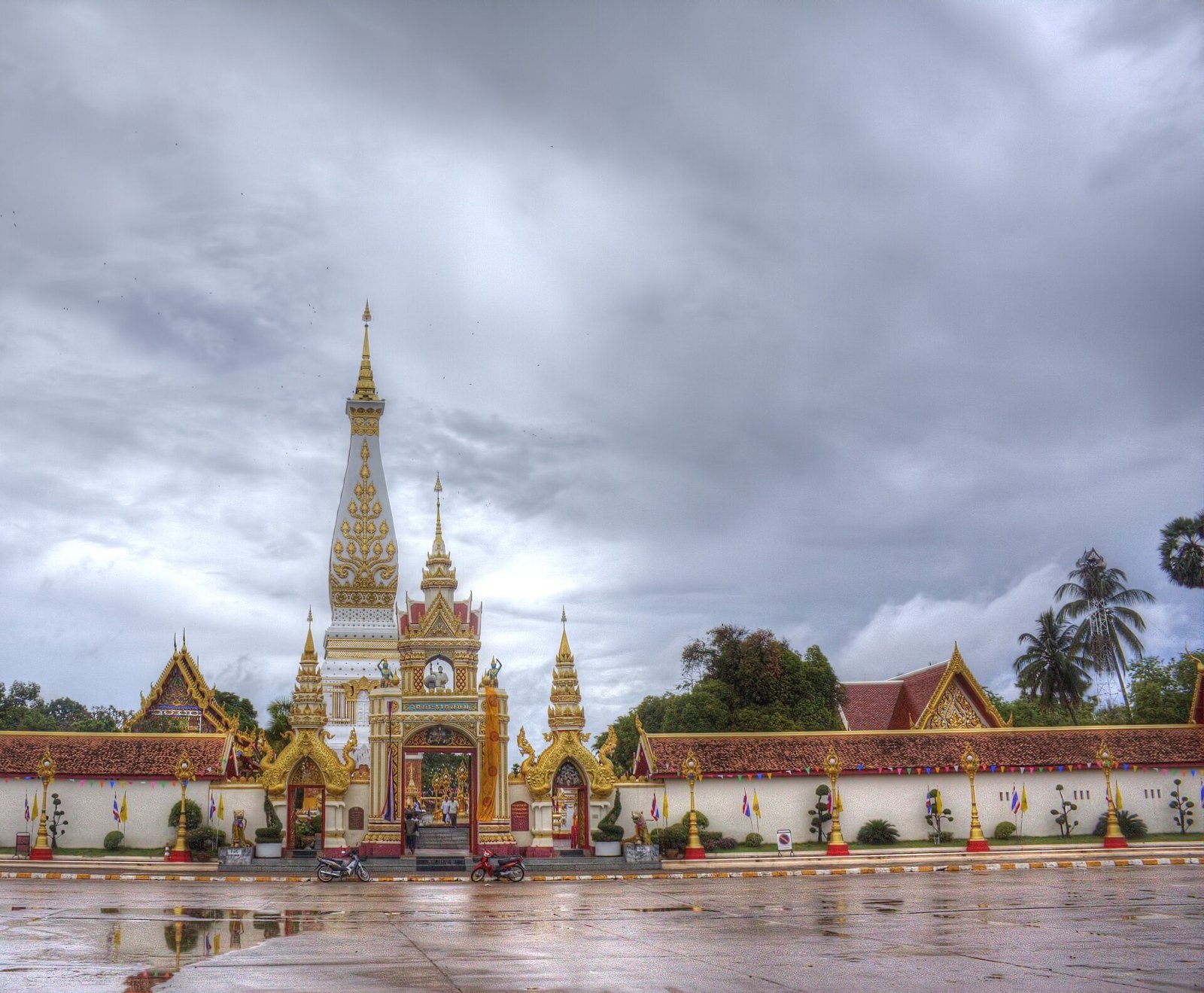
Wat Phra That Phanom is in That Phanom town, not in Nakhon Phanom city. That distinction should shape the stay and the journey. The chedi is a focus of living pilgrimage on the Mekong, with a history that combines religious tradition, archaeological evidence and reconstruction after its collapse in 1975. Give the worship area time of its own rather than treating the temple as a quick photograph on a distant city itinerary.
Read the sacred history in two ways
The Urangadhatu tradition associates the monument with the Buddha’s breastbone relic and a gathering of regional rulers. The Fine Arts Department treats this as a foundation legend, while identifying older brick carving and architectural evidence separately. A visitor can respect the religious account without presenting every legendary event as an archaeologically dated occurrence.
The distinction is visible in the building itself. The current chedi is a reconstruction, and the department records restoration during 1975–1979. The Tourism Authority of Thailand likewise explains that the monument seen today replaced the one destroyed in 1975. Its religious continuity does not mean every surface is an untouched survival from the earliest foundation.
Look from the base towards the golden finial
The Fine Arts Department describes a square, two-tiered body rising into a tall, tapering lotus-like upper section. Red carved-brick panels at the lower level contain people, animals and scrolling plant designs. These lower details deserve attention before the eye follows the white tower upward.
There is a real entrance on the eastern side and false-door treatment on the other sides in the documented architectural arrangement. That does not establish a public route inside the monument. Read the external composition from the areas open to visitors, and follow barriers rather than assuming that an architectural doorway is an invitation to enter.
An effective viewing sequence is to take in the whole chedi first, then compare its base and repeated decorative forms. This is an editorial way of looking, not a prescribed ritual. Leave the immediate worship positions clear and move aside before studying a carving or adjusting a camera.
A pilgrimage rather than a performance
The annual worship festival illustrates the temple’s continuing place in regional life. The provincial government’s published 2026 programme ran from 26 January to 3 February and included offerings, candle processions, chanting and cloth offerings to the chedi. Those dates describe a completed event, not a calendar for the next festival.
Visitors who want to attend a future ceremony should obtain that year’s announced dates before arranging a tightly timed trip. A festival visit and an ordinary-day visit have different purposes. During a ceremony, give priority to the people taking part and do not expect a clear photographic foreground or unrestricted circulation.
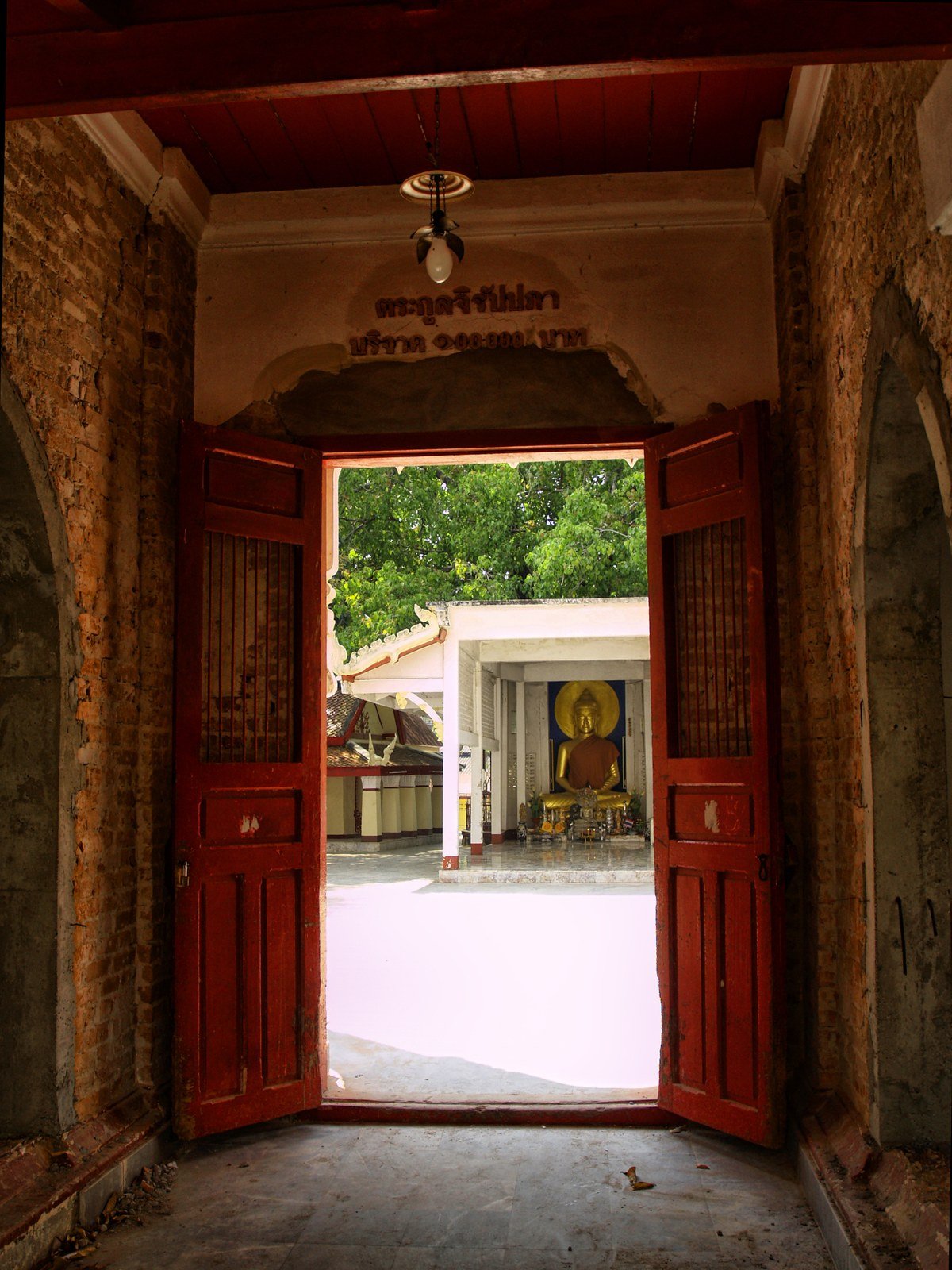
Dress for a place of worship, with shoulders and knees covered, and follow shoe-removal instructions at the individual religious spaces. Offerings are a personal religious choice. There is no need to imitate an unfamiliar ritual simply to feel that a visit has been completed.
Choose That Phanom or a longer regional approach
The department places the temple on Chayangkun Road in That Phanom district. A hotel in That Phanom town can support a temple-focused stay. A Nakhon Phanom city hotel serves a different urban base and requires a separate road journey; the shared province name does not put the two beside one another.
For a hired vehicle, agree the actual temple name, where the vehicle will wait and how the return is arranged. An outward transfer alone does not settle the trip back. If continuing to another provincial centre, keep luggage handling and the onward journey in the plan instead of assuming a taxi will remain available after a ceremony.
Use daylight and confirm the areas you need
The tourism directory’s opening-hours fields are inconsistent, while its note gives 05:00–20:00. That is not a reliable basis for promising access to every hall or exhibition throughout that period. A daylight visit with time in reserve is the more useful starting point; confirm any particular building or evening ceremony directly before travelling.
No current admission tariff or date-specific closure calendar is established here. Keep a possible donation separate from any transport or tour charge, and ask what a paid excursion includes. The essential visit is the sacred chedi and its living surroundings, not a claim that a ticket grants access to every part of the monastery.
Sources & visiting details
Sources checked on 29 October 2026. Visiting limits and conflicting published details are explained in the guide.