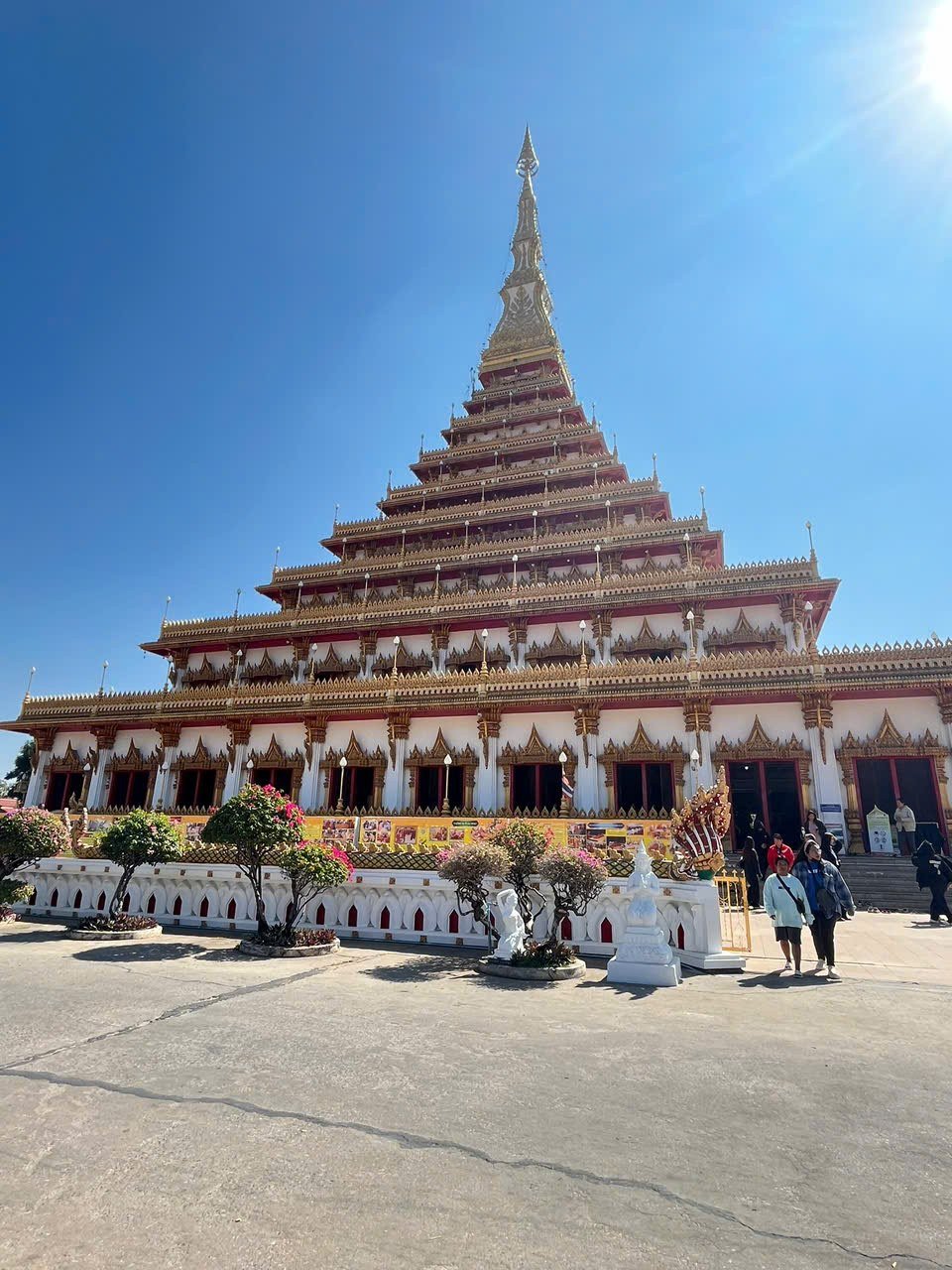
Wat Nong Wang belongs to a Khon Kaen city day, with Bueng Kaen Nakhon as the geographical reference. Its landmark is Phra Mahathat Kaen Nakhon, the nine-level chedi where religious displays, carved stories and views form different parts of the visit. Decide how much climbing suits the group before making the uppermost floor the sole reason for coming.
Begin with the building and the lake-side setting
The provincial tourism office places the monastery on Klang Mueang Road. The chedi’s stepped silhouette is a useful landmark, but the lower level is a religious space in its own right. Begin there and read the current access signs before moving upward.
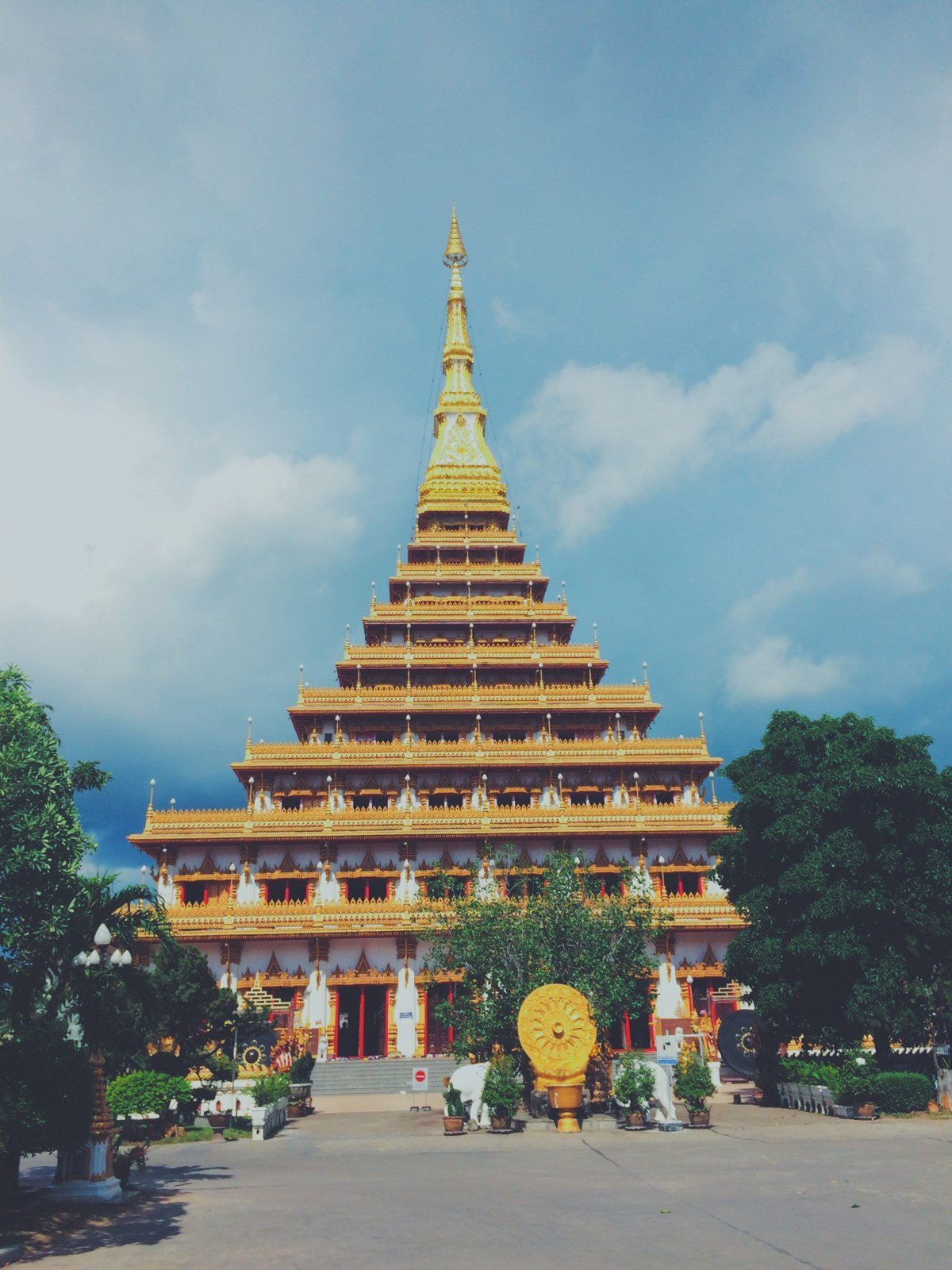
Kok Si Subdistrict Administration describes a square-based tower with smaller stupas at its corners and naga decoration around the enclosure. It identifies the tower’s form with Phra That Kham Kaen. Seeing that relationship can add meaning to a later visit to Kham Kaen, but the two are separate destinations, not neighbouring parts of one compound.
The stories change from level to level
The local authority’s floor guide describes relics and principal Buddha images at the first level. Door and window decoration draws on stories such as Champa Si Ton, Sang Sin Chai and Nang Phom Hom. It is worth looking at the carved panels as narrative art rather than passing them solely to reach a view.
Other documented levels contain museum objects, images associated with Buddhist teaching and important scriptures. Their themes differ: the building is not simply nine repetitions of one room. Look at a smaller selection carefully if the whole ascent would turn the visit into an exercise in counting floors.
The provincial office identifies the ninth level as a relic shrine and a viewpoint across Khon Kaen. A clear view is an extra to the religious visit, not something guaranteed by the floor number. Follow the rules at that level and keep the passages clear for people paying respect.
Separate the ability to visit from the ability to climb
Nine levels mean an ascent should be a deliberate choice. The information used here does not establish a public lift, a fully step-free route or every stair dimension. Do not describe the whole building as wheelchair accessible simply because the ground-level compound can be approached by vehicle.
A useful group plan is to agree how far each person wants to go and where to meet afterwards. A visitor interested mainly in carvings or worship does not need to pursue the highest terrace. Keep shoes and personal belongings manageable when following removal instructions at religious areas.
Published hours and the recent restoration context
Kok Si’s visitor page publishes 08:00–18:00 for the chedi. Treat that as a planning window and confirm upper-floor arrangements on arrival, particularly if travelling specifically for the ninth-level shrine. Monastery grounds, a hall and a high-level terrace need not follow identical access arrangements.
Government reporting records substantial restoration of the upper chedi and its golden umbrella in 2025, followed by the umbrella ceremony in November that year. These are dated records of work and ceremony. They do not prove either that scaffolding remains today or that every floor is currently unrestricted. Current signs and attendants take precedence over an older photograph.
Build a city visit rather than a cross-province checklist
Bueng Kaen Nakhon is the natural city reference for this temple. A Khon Kaen hotel chosen for meals and city services can support the visit, but check its actual address and the route to Klang Mueang Road. A station, airport or university-side hotel describes a different part of the city.
A lake-side break and Wat Nong Wang can form a focused city outing, subject to the areas open when you arrive. Phra That Kham Kaen requires its own road trip outside this immediate city setting. If combining them, arrange the vehicle and pacing first instead of presenting a continuous temple walk.
The strongest reason to stay longer here is the combination of carved storytelling, a living relic shrine and the city setting. Visitors chiefly interested in a quick skyline photograph may miss the building’s more specific character. Give the lower decoration and worship spaces a place in the plan even if the view is available.
Sources & visiting details
Sources checked on 29 October 2026. Visiting limits and conflicting published details are explained in the guide.