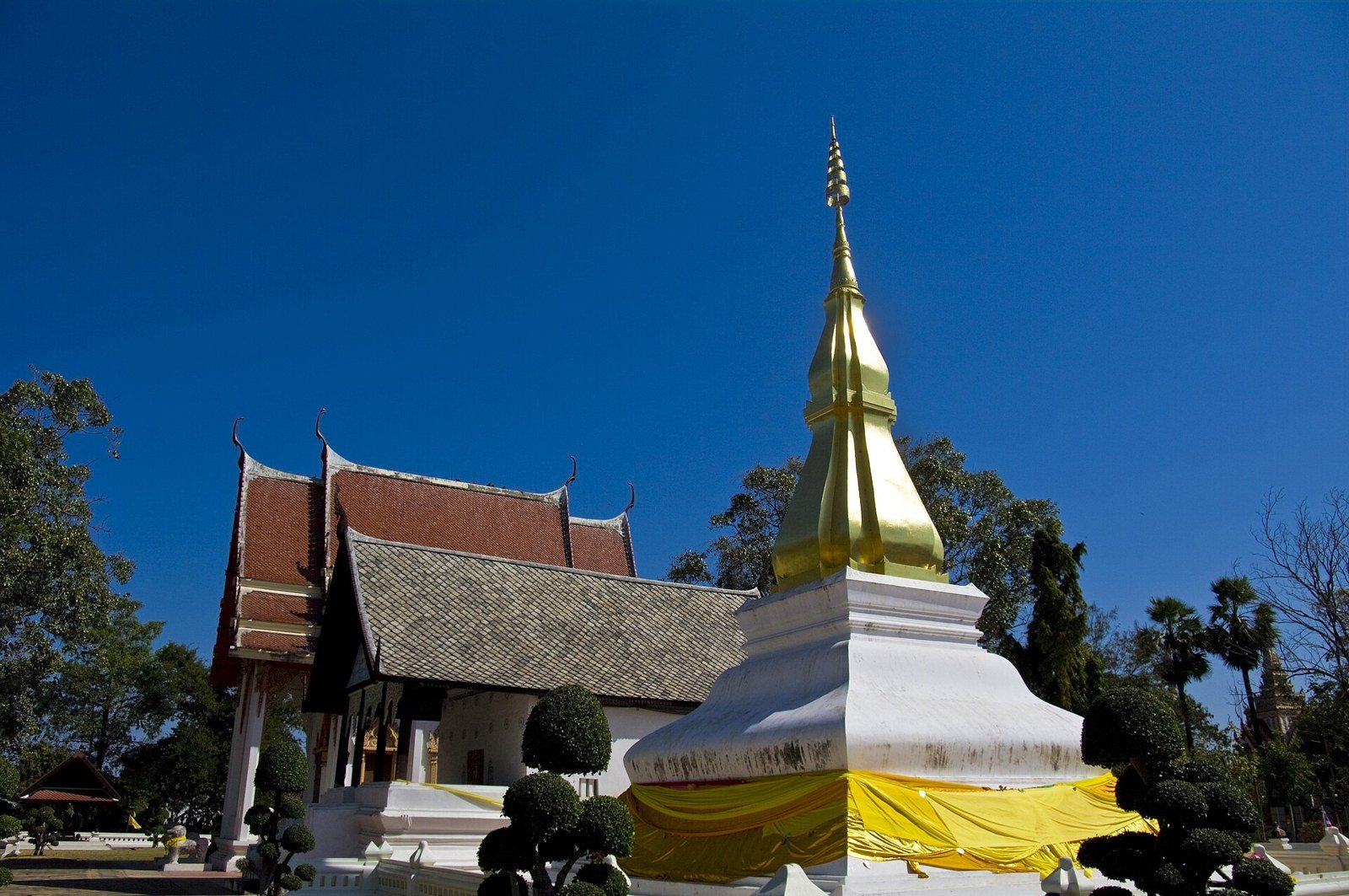
Phra That Kham Kaen belongs to Wat Chetiyaphum in Ban Kham, Nam Phong district. It is not the nine-storey Phra Mahathat Kaen Nakhon at Wat Nong Wang in Khon Kaen city. Making that distinction first prevents a mistaken destination and helps give this smaller relic monument the attention its own history and setting deserve.
Two similar names, two different visits
The Tourism Authority of Thailand identifies Phra That Kham Kaen at Ban Kham, Nam Phong, while placing the nine-storey monument at Wat Nong Wang. Both can belong to a Khon Kaen trip, but they serve different interests. The city monument offers a layered interior and high viewpoint; Kham Kaen is a separate relic shrine outside that city itinerary.
Use Wat Chetiyaphum together with the chedi name when arranging transport. Do not select a hotel merely because its description mentions a Khon Kaen temple or a similarly spelled “Kaen” attraction. A city-based hotel can support the journey, but it does not make the shrine a walk from the central hotel district.
Treat the tamarind story as a religious tradition
A local-government account relates the name to a dead tamarind trunk that renewed itself while a party carrying Buddha relics travelled towards Phra That Phanom. Finding the original destination already completed, the party is said to have enshrined the relics at the revived tree instead.
This is a founding legend associated with the shrine, rather than an archaeological travel record. It gives the place a distinct narrative and explains why the tamarind theme matters. Visitors do not need to accept the story literally to recognise its role in the monument’s religious identity.
The legend also connects Kham Kaen with the wider relic landscape of Isan. It does not create a practical transport connection with Phra That Phanom or mean that the two monuments should be attempted as nearby stops on the same casual outing.
Look beyond the height of the chedi
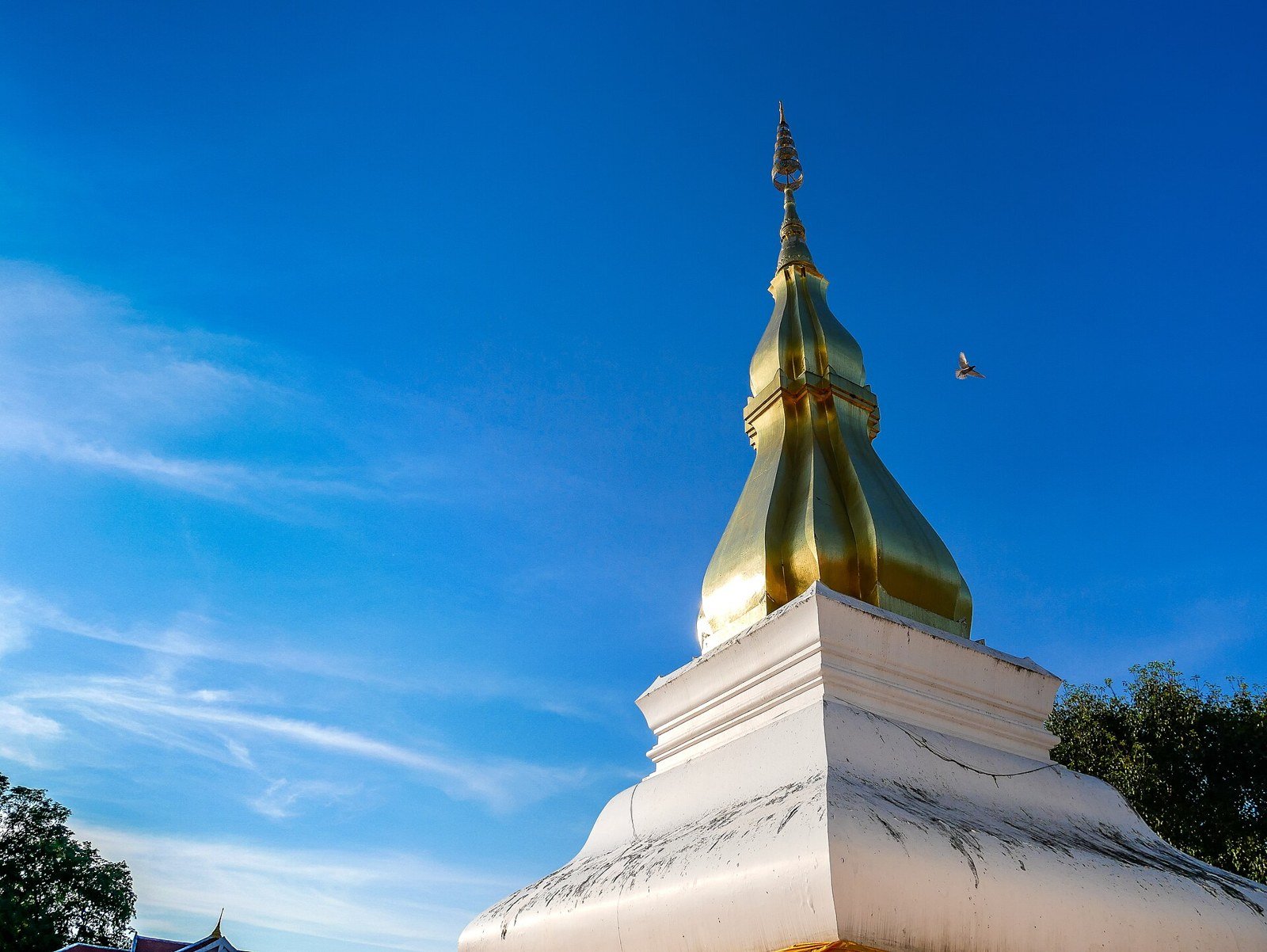
The local heritage description identifies a lotus-like form, a rising square plan and an ornate summit. The older sim, or ordination hall, to the east is described separately, with timber decorative work and painted figures at the entrance. This encourages a visit that pays attention to the surrounding temple rather than stopping at the main monument alone.
Compare the building forms and the materials from the public approaches. The smaller shrine and the adjacent hall are a useful contrast to the large multi-level structure at Wat Nong Wang. Scale is not the only reason to visit a temple; the relationship between the relic monument, the hall and local devotion is the stronger subject here.
Entry into an ordination hall may depend on worship and instructions displayed by the temple. A heritage account of its decoration is not an invitation to open a closed door or enter an area reserved for religious use. An exterior visit can still help explain the arrangement.
Keep the Nam Phong journey explicit
Plan a vehicle journey to Ban Kham and its return as part of the day. This guide does not promise a public bus from a particular city hotel, an available taxi at the temple or a universal one-way fare. Those arrangements depend on where you start and the service actually booked.
For a combined Khon Kaen temple day, separate the city visit to Wat Nong Wang from the outward journey to Kham Kaen. Decide the order according to pickup, hotel location and the time you want at each place. Do not turn a geographically spread plan into a timed itinerary using distance alone.
Hours and the annual worship period
Daeng Yai Subdistrict Administration’s tourism page lists daily visiting from 06:00 to 18:00. Use that as published guidance and check the access instructions on arrival, especially if your visit depends on entering an individual building rather than seeing the grounds.
TAT describes an annual homage festival on the full moon of the sixth lunar month. A lunar observance is not a fixed Gregorian date or a promise of the same programme every year. If the festival is your main reason for travelling, confirm the announcement for that year before reserving transport or accommodation.
A normal daytime visit and a busy worship event require different expectations about circulation and parking. Give people making offerings room to move, and follow the temple’s directions around the relic area. No current festival timetable or special transport plan is supplied here.
Sources & visiting details
Sources checked on 29 October 2026. Visiting limits and conflicting published details are explained in the guide.