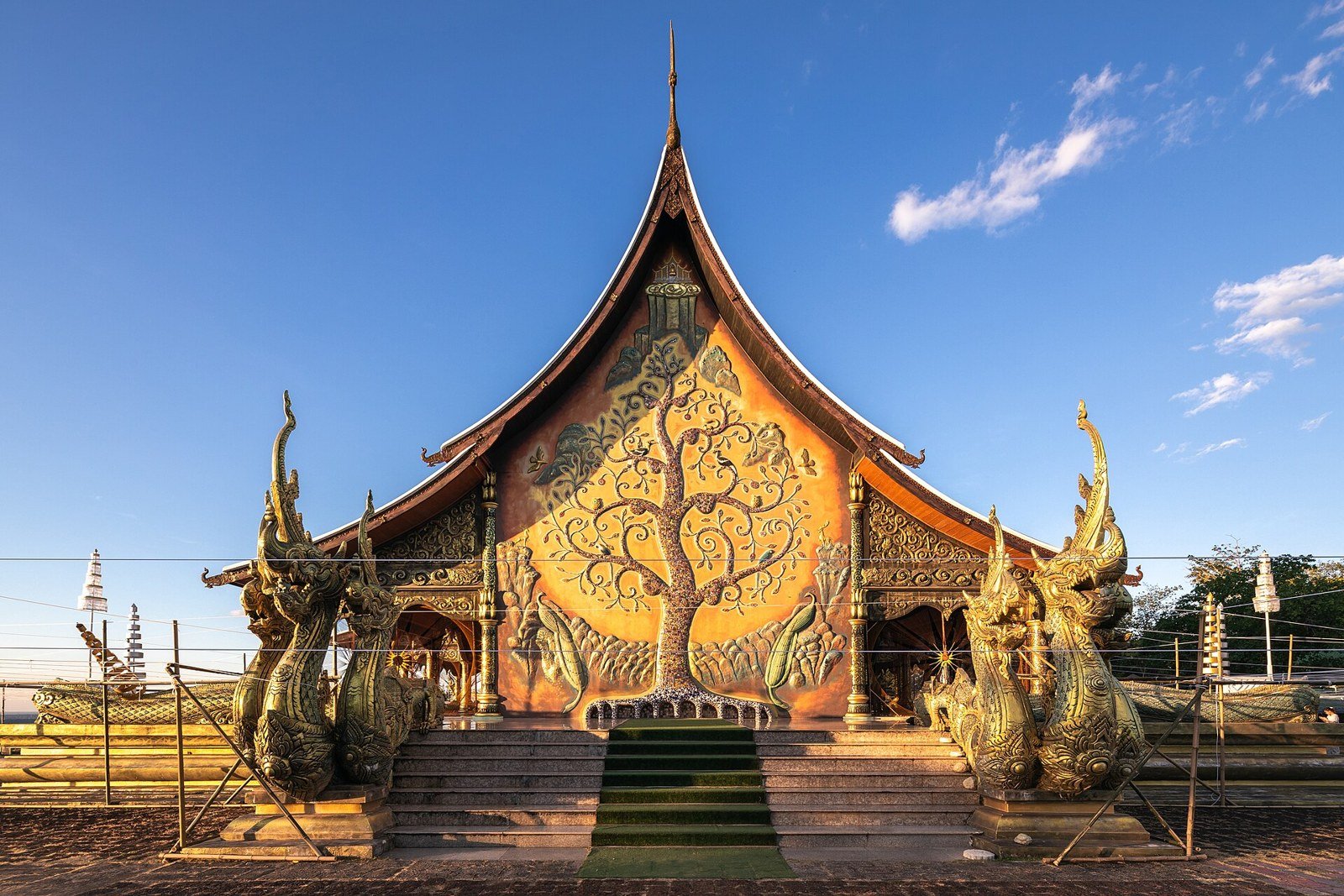
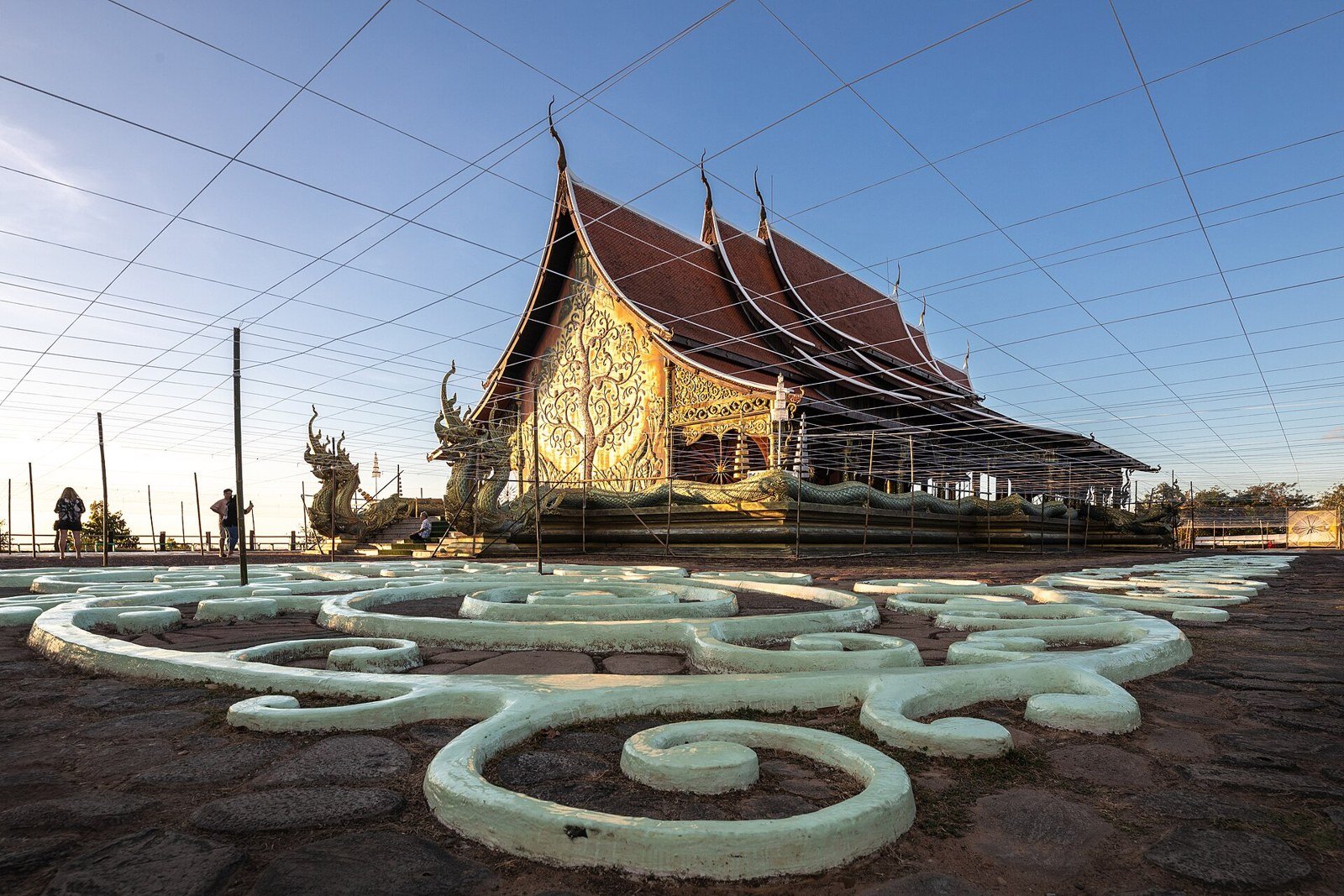
Wat Sirindhorn Wararam Phu Phrao is a hilltop temple in Chong Mek, Sirindhorn district, rather than a temple in Ubon Ratchathani city. Its famous luminous tree is on the back of the ordination hall. Seeing the building in daylight and staying for the changing light can be a rewarding plan, but the return journey matters as much as the photograph.
A community temple with a distinctive contemporary artwork
The provincial public-relations office describes Phu Phrao as a centre of worship and community activity. The gilded hall stands above its surroundings, while the rear wall carries the kalpavriksha or wish-fulfilling tree. These are two different aspects of the same building: its daytime architecture and the luminous artwork associated with evening visits.
The office attributes the tree design to artist Khunakon Parinyapunno and explains that its luminous material receives daylight and releases light later. That description is a reason to expect a changing effect, not a precise promise of brightness at a particular clock time. A photograph made with a camera can also look different from an unaided view.
Look at the hall before concentrating on the tree
TAT identifies the golden ordination hall and the rear tree image as the main features. Arriving while there is still daylight gives you a chance to understand the building and the surrounding hilltop before deciding where to wait. It also avoids treating the temple as a dark photographic backdrop with no religious purpose.
The viewpoint is described by TAT as looking towards the reservoir landscape and the Chong Mek border crossing. Visibility varies, and the view does not make the monastery part of the border checkpoint. Keep any separate border or reservoir excursion distinct from the temple’s own entrance and visiting conditions.
At the back of the hall, leave the central viewing area available to others. Check local instructions before using a tripod, flash or other equipment. There is no need to block a doorway or walk into a worship-only area to reproduce a familiar image.
Use the published window without turning dusk into a timetable
TAT’s Thai visitor listing gives daily hours of 06:00–20:00. Some secondary accounts quote a later closing time, so do not rely on that later hour for a return plan. Confirm the intended evening’s arrangements, and leave time to reach the vehicle before the published limit.
The luminous effect is associated with dusk and darkness, rather than a scheduled light show established here. No fixed illumination start time, brightness guarantee or special-show ticket is verified. Build the visit around the hall and the setting, with the changing appearance of the tree as the additional reason to remain.
The transport decision belongs before the evening visit
A city hotel in Ubon Ratchathani is a regional base requiring a substantial separate road excursion to Sirindhorn district. A property closer to Chong Mek or the reservoir may serve a different travel plan. Compare the real address with the transport arrangement; the word Ubon in two listings does not establish proximity.
When hiring a driver, agree waiting, the exact pickup place and the return destination before starting. A one-way daytime ride is not confirmation that another vehicle will be available after dark. If the group wants to remain for the tree, that waiting period belongs explicitly in the agreement.
The hilltop setting also makes the final approach and movement around the compound worth checking for anyone who finds steps or gradients difficult. The published descriptions do not establish a continuous accessible route or a lift. Ask about the particular route your group needs rather than relying on a general map pin.
Choose a focused visit rather than an overfilled eastern-Ubon day
Chong Mek and the Sirindhorn reservoir provide geographical context, but adding them does not automatically create a workable all-day itinerary. Keep the temple’s evening priority clear if the tree is the main interest. A late arrival caused by too many earlier stops leaves less flexibility for both the hall and the departure.
Dress for a monastery, cover shoulders and knees and follow instructions about shoes at the religious buildings. Religious activity may affect the spaces available for photographs. This is a place where patience and an agreed return arrangement are more useful than a rigid sequence of timed photo stops.
Sources & visiting details
Sources checked on 29 October 2026. Visiting limits and conflicting published details are explained in the guide.