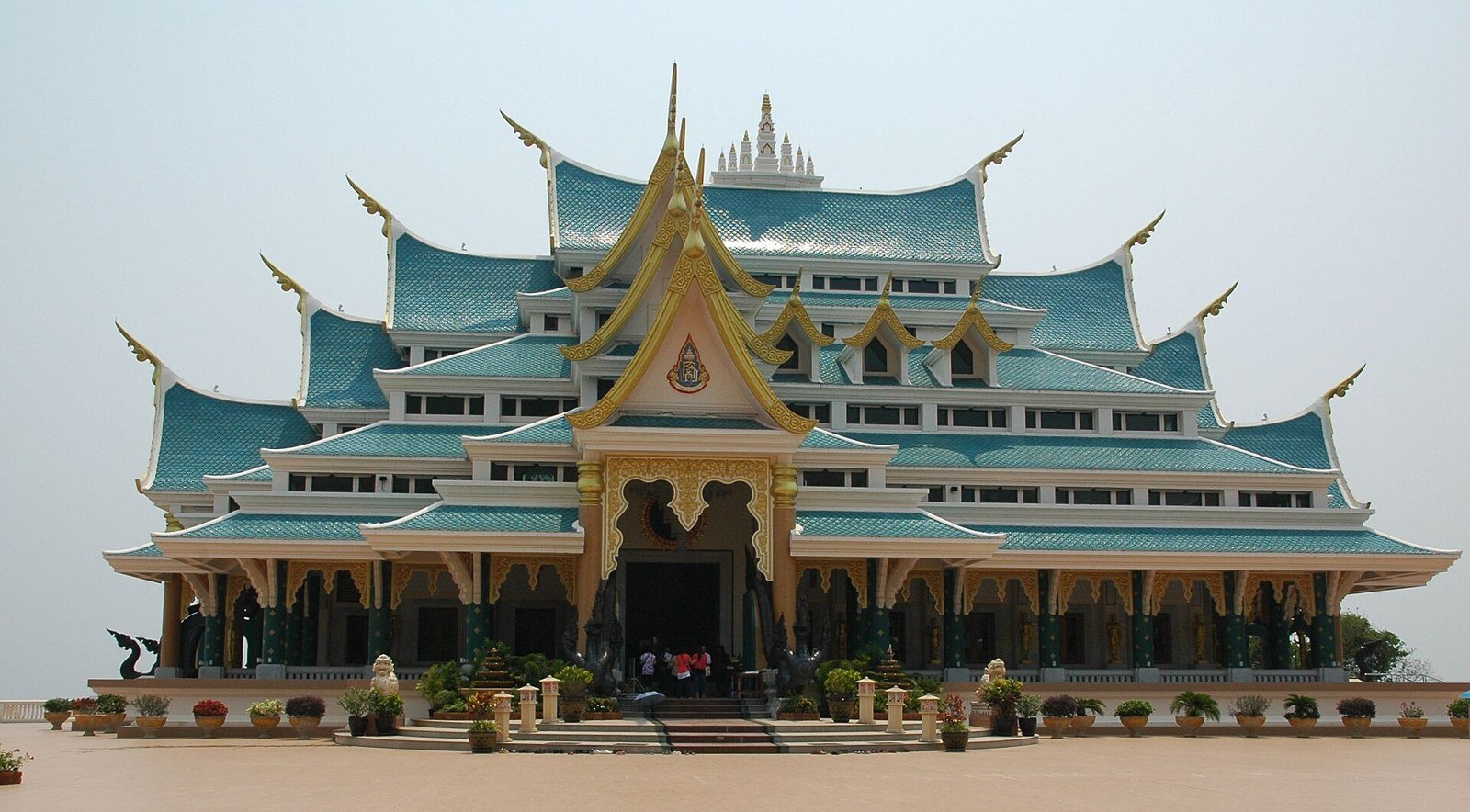
Wat Pa Phu Kon is a separate journey into Na Yung district, rather than a temple in central Udon Thani. Its white marble reclining Buddha and hilltop hall are the main reasons to make that journey. Start with the hall’s visiting period and a return transport arrangement; a city hotel booking alone does not resolve either decision.
Put the temple in the correct part of Udon Thani
The temple’s own address is Ban Na Kham Yai, Ban Kong subdistrict, Na Yung district. The Tourism Authority of Thailand places it within the Na Yung–Nam Som forest setting near the meeting area of Udon Thani, Loei and Nong Khai. That is a different landscape and travel plan from the provincial capital.
The temple’s published travel page gives approximately 125 kilometres from Udon Thani town. Use that as the scale of the excursion, not as a promise of a particular driving time. The same page contains older transport timetables, so its flight and train entries should not be treated as live connections. Arrange the actual vehicle journey separately from arrival in the province.
A city-based stay can work when the hotel is useful for the rest of your Udon Thani trip and you have a full outing available. A nearer accommodation option must still be judged by its real approach road and return arrangements. The word “Udon” in a hotel name is not evidence that the temple is nearby.
Give the reclining Buddha the attention it deserves
The temple’s construction account identifies a 20-metre white marble reclining Buddha, created with its hall as a major modern Buddhist art project. It names the sculptor Naris Rattanawimon and describes copper relief work associated with the Mahaparinibbana story beneath the image. These details make the interior more than a place to collect a wide photograph.
Look first at the relationship between the long figure and the hall around it. Then consider the relief work and the different materials, keeping to the public circulation route. A view that includes the whole figure and a closer look at a permitted detail answer different questions; neither requires crossing a barrier or interrupting a person praying.
This is contemporary religious craftsmanship in a forest-monastery setting. It should not be introduced as an excavated ancient reclining Buddha or as proof that every part of the complex belongs to one historic period. The distinction helps when comparing it with relic monuments elsewhere in this atlas.
The main hall has a more useful timetable than the grounds
The official temple homepage states that the viharn doors open from 08:30 to 17:00. TAT also distinguishes those hall hours from a longer period for the wider grounds. If seeing the reclining Buddha is the purpose of the trip, use the hall period rather than assuming an early arrival or an evening visit will include the interior.
Leave a margin for entering and finishing the visit rather than scheduling your vehicle to reach the gate at the last minute. The published period does not establish access to every side building or to every separate area throughout the day. Follow any notice at the entrance that changes the normal arrangement for worship or maintenance.
Dress for the hall, and ask before using photography equipment
The temple explicitly excludes sleeveless tops and shorts or skirts above the knees from the hall. Its official guidance says Thai-style clothing can be borrowed through staff. Arriving in suitable clothing is the more straightforward option; a loan notice does not promise an unlimited choice of sizes or immediate availability for a large group.
The temple’s published photography rules allow ordinary souvenir photographs around the hall, but distinguish these from commercial photography trips and organised filming. Documentary work requires permission, and separate instructions apply to drones. A notice also restricts reuse of photographs of the white-marble reclining Buddha without temple permission. Anyone planning more than a casual visit should obtain current instructions rather than infer permission from images already circulating online.
Plan the hill visit around the people in your group
TAT describes the hall and surrounding buildings on a hill. No complete step-free route, lift specification or wheelchair-accessible bathroom arrangement is established by the visitor information used here. If someone needs to avoid stairs, confirm the route from vehicle drop-off to the hall before making the long journey.
The useful question is not simply whether a car can reach the temple, but where it can stop and what remains between that point and the area you want to enter. A companion’s ability to walk a slope does not establish that the same route suits another member of the group.
Keep the return journey part of the visit
Agree whether a hired vehicle waits, where the pickup will be and how the return is charged. Do not assume that an outward lift to a forest temple automatically creates an available return ride. These are editorial planning questions, not a published shuttle schedule.
For a focused day, treat the hill and the hall as the main excursion. Add another stop only after comparing its actual road location with the agreed vehicle route. Staying in Udon Thani can support this visit, but the remote temple should remain an explicit journey within that stay.
Sources & visiting details
Sources checked on 29 October 2026. Visiting limits and conflicting published details are explained in the guide.