
Phra That Na Dun is a modern relic monument with an older archaeological story behind it. The important distinction is between the chedi visitors see today and the ancient finds that inspired its construction. Visit for both the place of worship and that connection with Champa Si, while planning Na Dun district as a separate destination from Maha Sarakham city.
The discovery and the monument are different things
TAT’s visitor account describes relic containers discovered in 1979 in the area of ancient Champa Si. A gold container was enclosed in silver and bronze containers, alongside other archaeological material associated with the Dvaravati period. The large chedi was subsequently built to enshrine the relics.
The visible monument therefore should not be presented as an untouched ancient chedi standing exactly as it did in Dvaravati times. Its form deliberately refers to the discoveries and older religious architecture. Recognising that distinction allows the modern shrine and the archaeological evidence to be appreciated without confusing their dates.
The Sirindhorn Anthropology Centre’s inventory records research into votive tablets, regional religious influence and the ancient settlement. For an interested visitor, the useful question is how objects and architectural forms connect the present monument to the wider cultural landscape, rather than whether every surface can be called ancient.
Look at the base as well as the outline
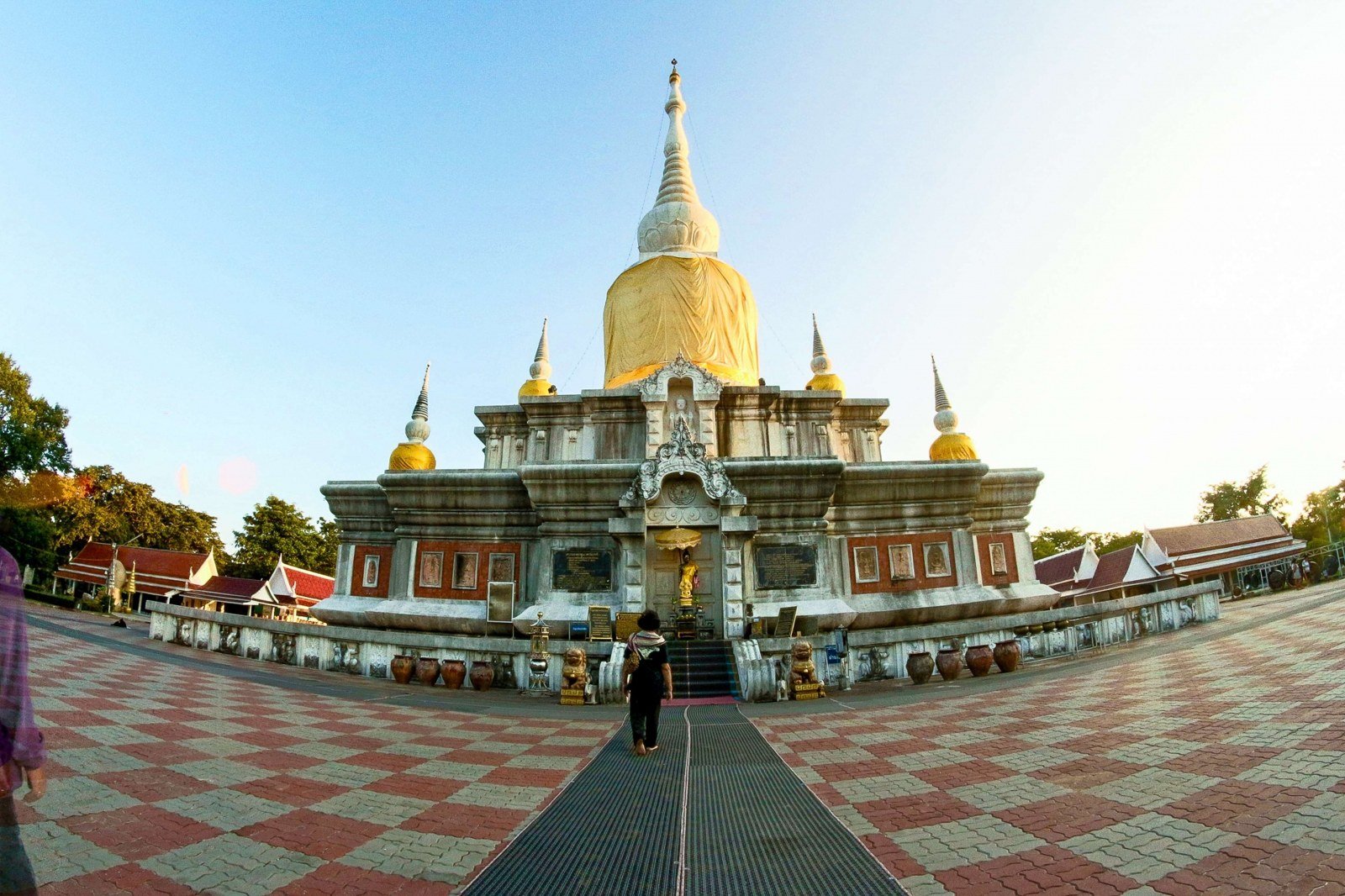
The archaeology inventory describes a square base, a circumambulatory platform, supporting figures and niches with standing Buddha images. Above those parts rises the large bell-shaped body and summit. This is a useful sequence for looking at the monument: begin with the scale of the overall form, then examine the lower details from the permitted route.
The same account explains that the design draws on the small bronze relic stupa and adapts architectural elements associated with Dvaravati religious sites. The architectural reference matters more than memorising a list of dimensions. It gives a reason to compare the shape with the relic container story.
When people are walking around the monument for worship, leave the route clear. Pause to the side for a photograph and respect any barriers around the base. A circumambulatory platform is a religious circulation space, rather than an invitation to climb decorative elements for a better view.
Give Champa Si its own context
TAT notes that archaeological objects from the discoveries were taken to Khon Kaen National Museum. Seeing the monument at Na Dun and seeing collections in another city are separate visits. Do not arrive expecting every excavated object described in a historical account to be displayed beside the chedi.
The broader Na Dun area also has archaeological associations beyond the modern monument. If that is the focus of the journey, identify the particular site or collection you intend to visit and check its own access arrangements. A general reference to an ancient city is not a current ticket covering every related ruin or museum.
For a short stop, the most coherent approach is to concentrate on the monument and its explanatory context. A deeper archaeology day needs more preparation than adding unnamed “nearby ruins” to a temple itinerary. The two styles of visit can be equally worthwhile, but they ask different things of the available time.
Plan from the actual overnight base
The anthropology centre describes the road approach from Maha Sarakham using highways 2040 and 2045 before the local approach to the monument. That establishes a district journey, not a central-city walk. A Maha Sarakham hotel may offer the right base for other parts of a trip while still requiring dedicated transport to Na Dun.
Agree the return with the driver or plan the self-drive route before leaving. A place listed in Maha Sarakham province does not automatically share the transport options available in the provincial capital. This guide does not promise a particular hotel pickup, a regular local shuttle or a fixed driving duration.
Published access and a sensible visiting window
The archaeology inventory says the site can be visited daily without an admission charge. TAT’s listing gives 08:00–20:00, while other local visitor pages have shorter hours. Treat the published information as guidance and confirm the entrance arrangements if the journey depends on an early or late visit.
Daylight is the editorial preference for examining the reliefs and understanding the architecture. A later period in the grounds does not prove that an associated exhibition or every religious area remains open. If seeing a particular interior is essential, ask about that area specifically.
The extent of a step-free visitor route and the specification of accessible facilities have not been established here. Someone who needs to avoid steps should check the approach from the intended vehicle stop to the actual worship area, rather than assume that the broad setting settles the question.
Keep annual events separate from ordinary access
Tourism descriptions mention an annual homage celebration, but a recurring festival tradition is not a current programme or guaranteed date. Confirm the announcement for the year you plan to travel if the event is the purpose of the visit.
On an ordinary visit, choose a pace that leaves time to understand the relic story and the lower architectural details. On a festival visit, worship activity and temporary arrangements may shape the route instead. Accommodation should support whichever kind of journey you actually intend to make.
Sources & visiting details
Sources checked on 29 October 2026. Visiting limits and conflicting published details are explained in the guide.